
 Image 1 of 3
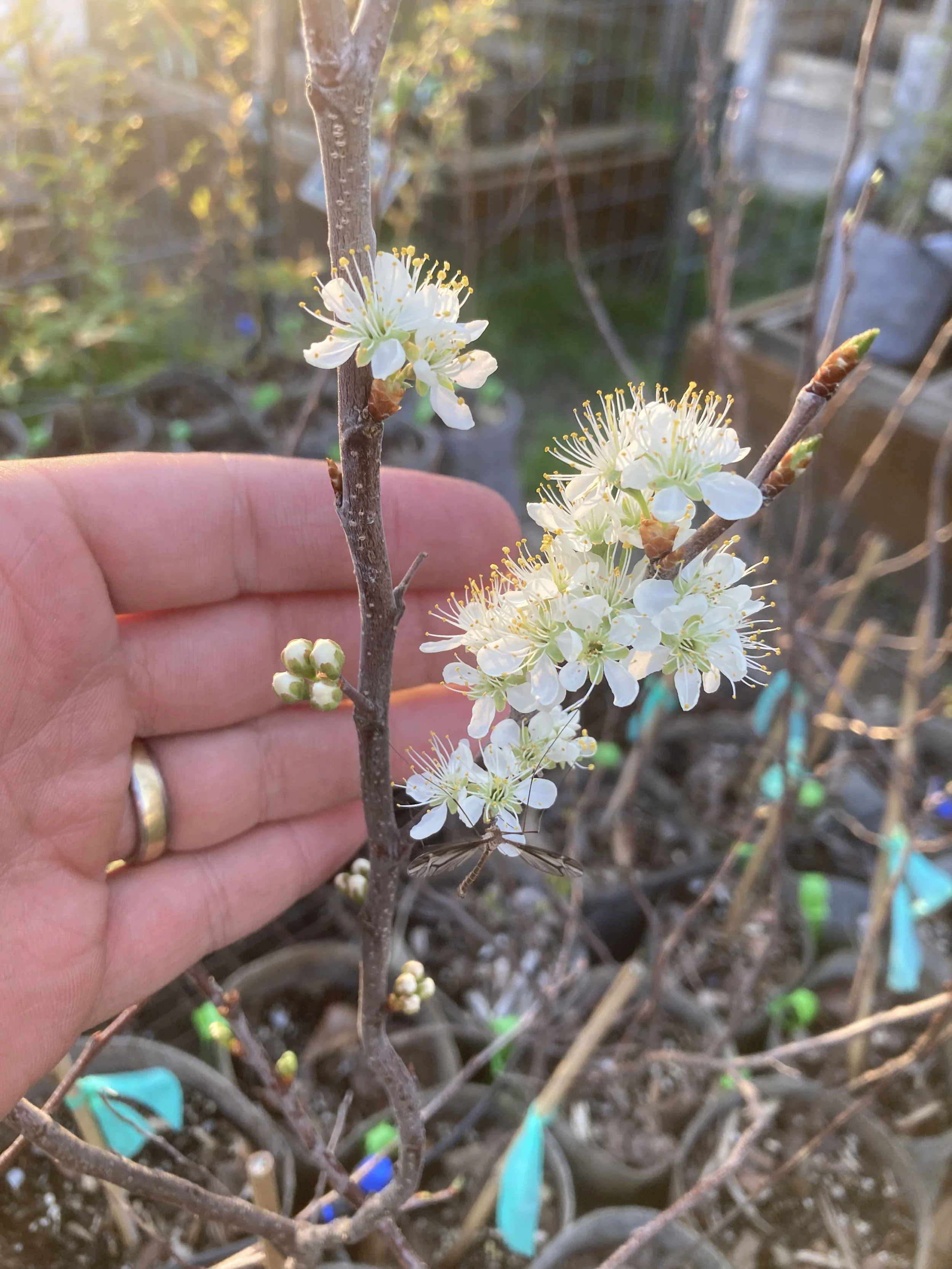 Image 2 of 3
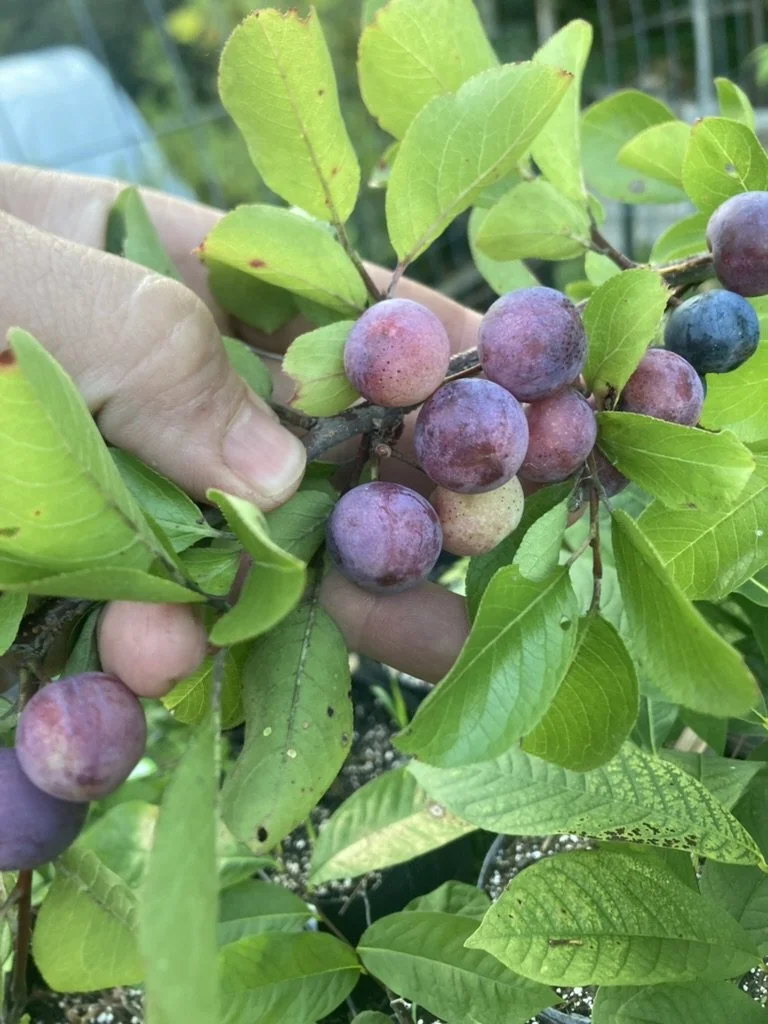 Image 3 of 3
Coastal Native Shrub | Edible Fruit | Pollinator Magnet | Wildlife-Friendly
Masses of fragrant white spring flowers support native bees and early pollinators
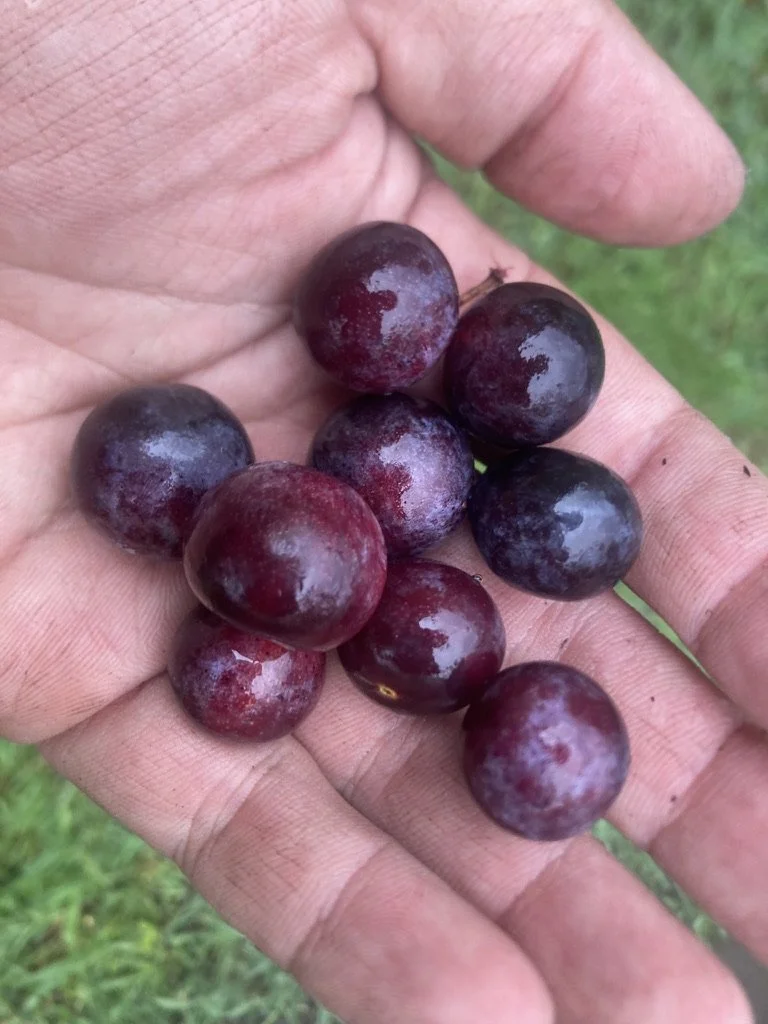
Produces flavorful purple-blue plums prized for jams, preserves, and fresh eating
Fruits provide an important late-summer food source for songbirds and small mammals
Naturally adapted to coastal dunes, sandy soils, salt spray, and wind
Excellent for erosion control, shoreline stabilization, and native hedgerows
Supports native insect diversity and helps strengthen coastal food webs
Attractive multi-season interest with spring blooms, summer fruit, and reddish fall foliage
Height: 3–8 ft | Spread: 4–10 ft
Soil: Sandy, gravelly, or well-drained soils; highly tolerant of poor soils
Light: Full sun
Type: Deciduous suckering shrub
Sex: Sex: Monoecious - bisexual perfect flowers on each tree, so every tree grows fruit
Pollination: Not self fertile. Plant multiple individuals for heavier fruit production
Prunus maritima is one of the great native shrubs of the Atlantic coast—beautiful, resilient, and deeply valuable to wildlife. Evolved to thrive in harsh coastal conditions, Beach Plum handles salt, drought, wind, and sandy soils with ease while providing nectar, cover, and abundant fruit.
Its dense branching creates excellent habitat for birds, while its flowers bring spring pollinators alive with activity. By late summer, the plum crop becomes a feast for both wildlife and humans alike. Whether planted in a coastal restoration, edible native landscape, pollinator hedgerow, or backyard habitat, Beach Plum brings authentic ecological value and regional character.
Coastal Native Shrub | Edible Fruit | Pollinator Magnet | Wildlife-Friendly
Masses of fragrant white spring flowers support native bees and early pollinators
Produces flavorful purple-blue plums prized for jams, preserves, and fresh eating
Fruits provide an important late-summer food source for songbirds and small mammals
Naturally adapted to coastal dunes, sandy soils, salt spray, and wind
Excellent for erosion control, shoreline stabilization, and native hedgerows
Supports native insect diversity and helps strengthen coastal food webs
Attractive multi-season interest with spring blooms, summer fruit, and reddish fall foliage
Height: 3–8 ft | Spread: 4–10 ft
Soil: Sandy, gravelly, or well-drained soils; highly tolerant of poor soils
Light: Full sun
Type: Deciduous suckering shrub
Sex: Sex: Monoecious - bisexual perfect flowers on each tree, so every tree grows fruit
Pollination: Not self fertile. Plant multiple individuals for heavier fruit production
Prunus maritima is one of the great native shrubs of the Atlantic coast—beautiful, resilient, and deeply valuable to wildlife. Evolved to thrive in harsh coastal conditions, Beach Plum handles salt, drought, wind, and sandy soils with ease while providing nectar, cover, and abundant fruit.
Its dense branching creates excellent habitat for birds, while its flowers bring spring pollinators alive with activity. By late summer, the plum crop becomes a feast for both wildlife and humans alike. Whether planted in a coastal restoration, edible native landscape, pollinator hedgerow, or backyard habitat, Beach Plum brings authentic ecological value and regional character.