Lindera benzoin (Northern Spicebush)
Deciduous Shrub | Eastern North American Native | Host Plant | Aromatic
Highlights for Native Plant Enthusiasts:
Essential host plant for the Spicebush Swallowtail Butterfly (Papilio troilus)
Supports biodiversity: Fruits feed native birds, especially thrushes and catbirds
Grows naturally in moist woodlands, streambanks, and rich bottomlands
Leaves and twigs emit a spicy, citrusy fragrance when crushed
Female plants produce clusters of bright red drupes in late summer
Brilliant yellow fall color adds seasonal interest to native landscapes
Growing Information:
Height: 6–12 ft | Spread: 6–12 ft
Soil: Prefers rich, moist, well-drained soils
Light: Part shade to full sun (best fruiting in more sun)
Zones: 4–9
Type: Deciduous shrub
Pollination note: Dioecious – plant both male and female for fruit
Why Native Growers Love It:
Lindera benzoin is more than just a beautiful shrub—it’s a keystone species in eastern woodland ecosystems. Its early spring blooms support native bees, and its spicy aroma connects gardeners with the land’s sensory heritage. Whether you’re creating a wildlife corridor, restoring a forest edge, or building a native edible garden, spicebush earns its place.
Lindera benzoin (Northern Spicebush)
Deciduous Shrub | Eastern North American Native | Host Plant | Aromatic
Highlights for Native Plant Enthusiasts:
Essential host plant for the Spicebush Swallowtail Butterfly (Papilio troilus)
Supports biodiversity: Fruits feed native birds, especially thrushes and catbirds
Grows naturally in moist woodlands, streambanks, and rich bottomlands
Leaves and twigs emit a spicy, citrusy fragrance when crushed
Female plants produce clusters of bright red drupes in late summer
Brilliant yellow fall color adds seasonal interest to native landscapes
Growing Information:
Height: 6–12 ft | Spread: 6–12 ft
Soil: Prefers rich, moist, well-drained soils
Light: Part shade to full sun (best fruiting in more sun)
Zones: 4–9
Type: Deciduous shrub
Pollination note: Dioecious – plant both male and female for fruit
Why Native Growers Love It:
Lindera benzoin is more than just a beautiful shrub—it’s a keystone species in eastern woodland ecosystems. Its early spring blooms support native bees, and its spicy aroma connects gardeners with the land’s sensory heritage. Whether you’re creating a wildlife corridor, restoring a forest edge, or building a native edible garden, spicebush earns its place.

 Image 1 of 7
 Image 2 of 7
 Image 3 of 7
 Image 4 of 7
 Image 5 of 7
 Image 6 of 7
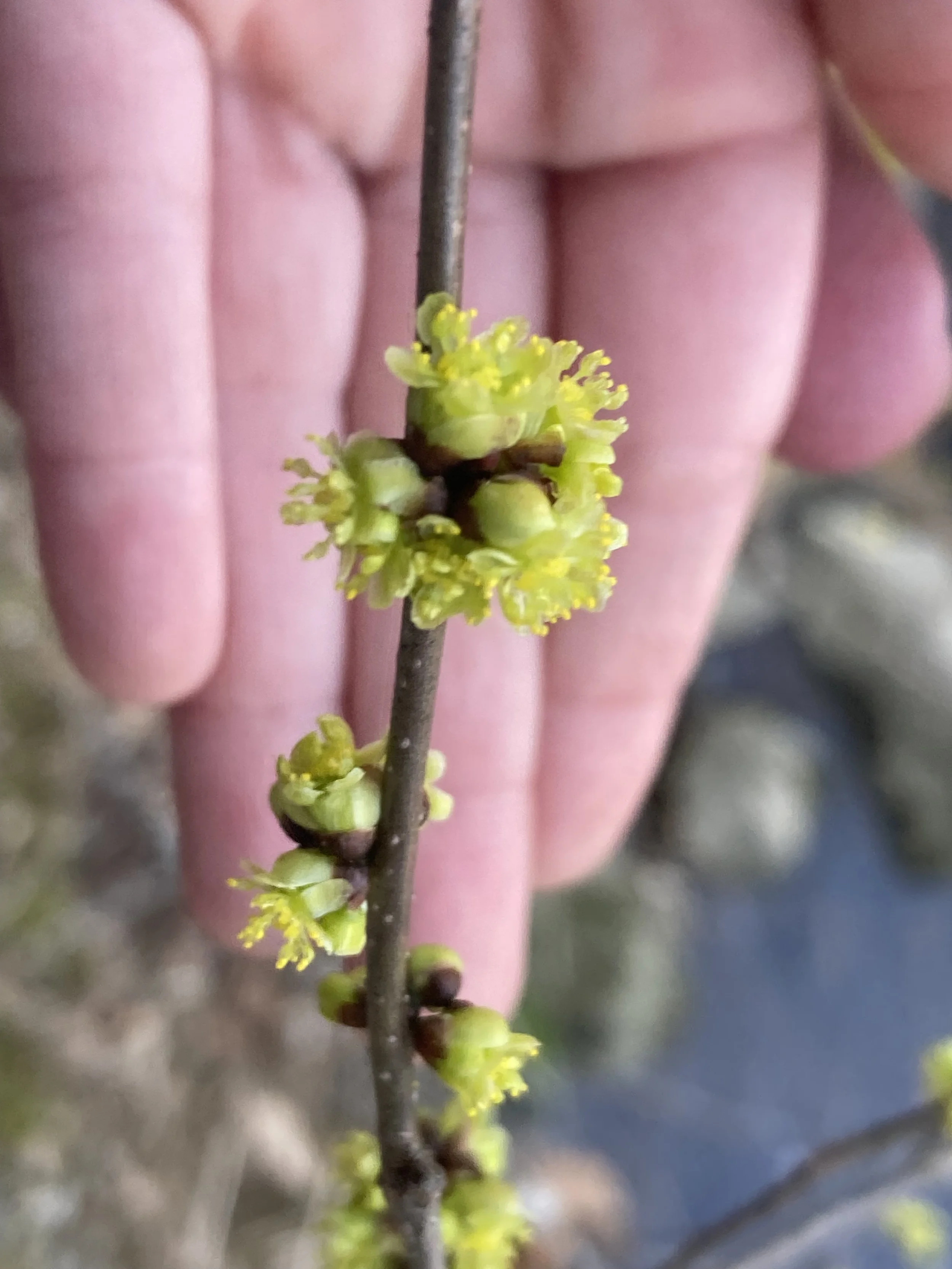 Image 7 of 7